
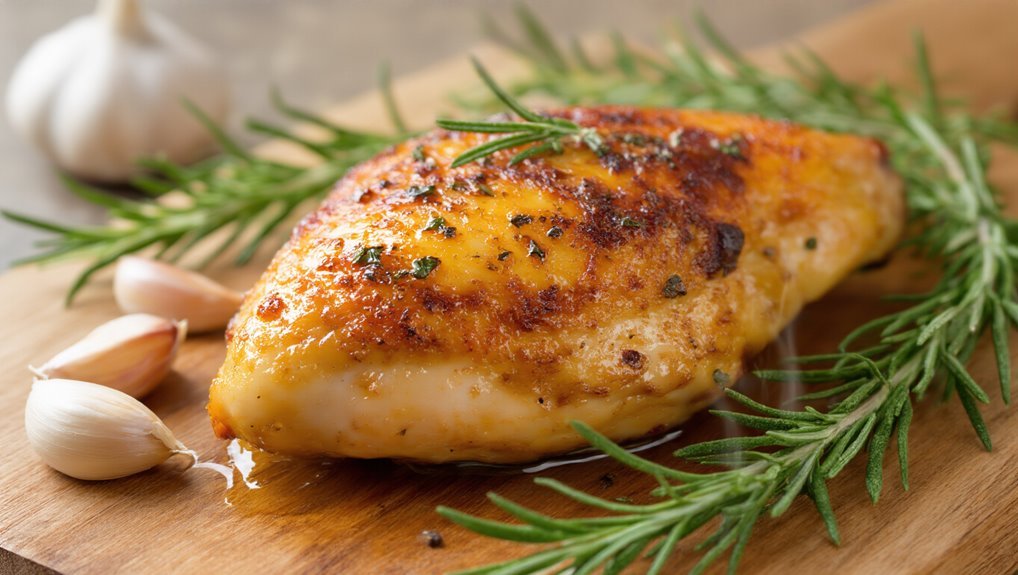
To achieve juicy, perfect baked chicken breast, start by choosing plump, boneless, skinless cuts. Marinate your chicken for at least 30 minutes using a mix of oil and acidic ingredients like lemon juice for flavor. Season well with salt, herbs, and spices. Cook at a high temperature for a shorter time to keep it moist, and always check the internal temperature to reach 165°F. Let it rest afterward for even juiciness. There’s more to discover.
Key Takeaways
- Choose plump, boneless, skinless chicken breasts for even cooking and moisture retention.
- Marinate chicken with acidic components and oil for at least 30 minutes to enhance flavor and tenderness.
- Season generously with salt, herbs, and spices to elevate the natural taste of the chicken.
- Bake at a high temperature and monitor internal temperature, aiming for 165°F (75°C) for perfect doneness.
- Let the chicken rest after baking to allow juices to redistribute for maximum juiciness and flavor.
Choosing the Right Cut of Chicken
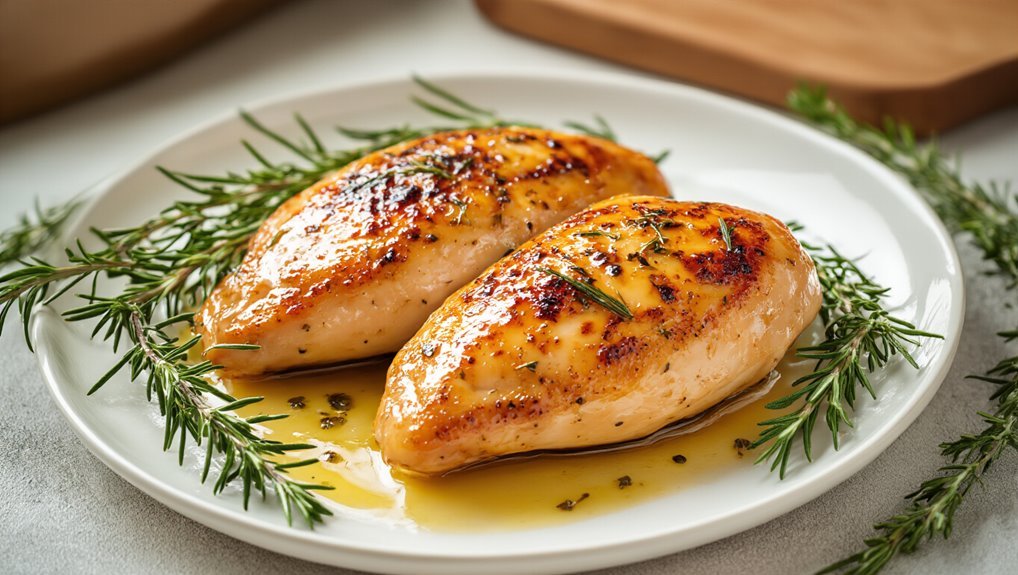
When it comes to making juicy baked chicken breast, choosing the right cut is essential for achieving tender and flavorful results. You’ll want to opt for boneless, skinless chicken breasts, as they cook evenly and absorb flavors better.
Look for cuts that are plump and slightly marbled; this fat helps keep the meat moist during baking. Avoid overly thin pieces, as they can dry out quickly.
If you can find organic or free-range options, they often have a richer taste and better texture. Remember, the quality of your chicken makes a significant difference.
Marinating for Maximum Flavor
To elevate the flavor of your baked chicken breast, marinating is a game changer. A good marinade infuses your chicken with moisture and taste, making every bite succulent.
Start by mixing together your favorite acidic component, like lemon juice or vinegar, with oil, herbs, and spices. The acid helps tenderize the meat while the oil adds richness. Aim to marinate for at least 30 minutes, but if you have time, let it sit for a few hours or even overnight in the fridge. Just remember to keep it covered!
When you’re ready to bake, remove the chicken from the marinade and let it come to room temperature for even cooking. This simple step will ensure your chicken is bursting with flavor!
The Importance of Proper Seasoning
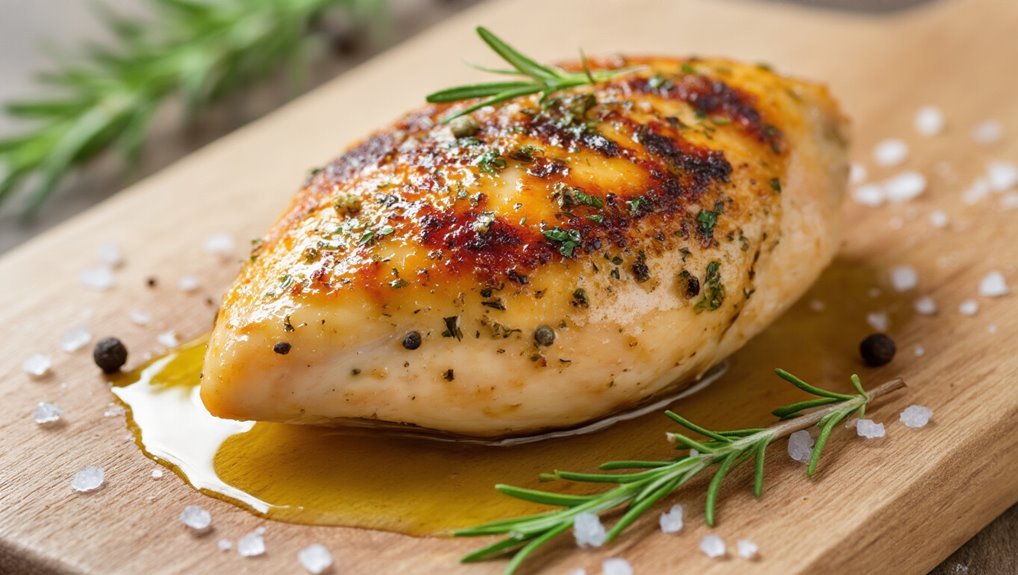
While marinating adds flavor, proper seasoning is equally crucial for achieving a delicious baked chicken breast. You can’t underestimate the impact of salt, pepper, and spices.
Salt not only enhances the chicken’s natural taste but also helps retain moisture during cooking. Don’t shy away from experimenting with herbs and spices, like garlic powder, paprika, or Italian seasoning, to elevate your dish.
Rub the seasoning generously over the chicken, ensuring every inch is coated. This way, you create a flavorful crust that locks in juiciness.
Cooking Techniques for Juiciness
Achieving juicy baked chicken breast requires a few key cooking techniques that lock in moisture and flavor. Start by brining your chicken for at least 30 minutes, as this helps to enhance juiciness.
Next, consider using a marinade; it not only adds flavor but also tenderizes the meat.
- Sear the chicken in a hot skillet briefly before baking to create a flavorful crust.
- Bake at a higher temperature for a shorter time to prevent drying out.
- Let the chicken rest after baking; this allows the juices to redistribute.
Monitoring Internal Temperature
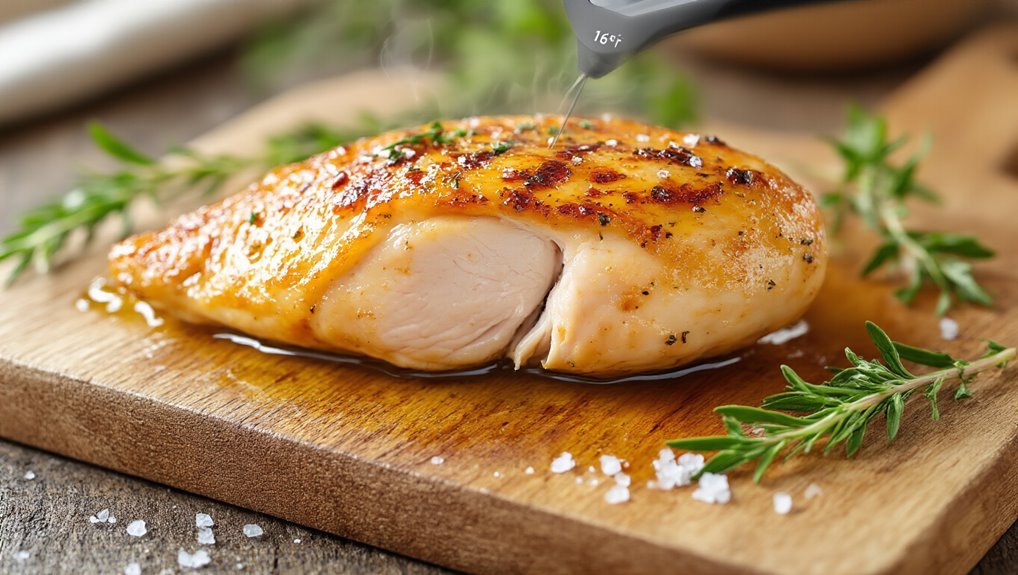
How can you ensure your baked chicken breast is perfectly cooked and juicy? The key lies in monitoring its internal temperature.
Use an instant-read meat thermometer to check the thickest part of the breast, avoiding any bones. You’re aiming for an internal temperature of 165°F (75°C).
Insert the thermometer into the chicken about halfway through the cooking time to gauge its progress, and check again a few minutes before the estimated finish. If it’s not quite there yet, keep baking and recheck every few minutes.
Letting It Rest Before Serving
After checking the internal temperature, it’s important to let your chicken breast rest before serving. This step is crucial for achieving maximum juiciness and flavor.
When you allow the meat to rest, the juices redistribute throughout, ensuring every bite is tender and moist.
- Resting helps prevent juices from running out when you slice.
- It enhances the overall flavor, making each bite more delicious.
- The chicken continues to cook slightly, reaching that perfect temperature.
- It allows the fibers to relax, resulting in a more tender texture.
- Patience pays off; the resting period boosts your dish’s presentation.
Frequently Asked Questions
Can I Use Frozen Chicken Breasts for Baking?
Imagine a winter storm, where frozen chicken breasts wait patiently. You can use them for baking, but remember to thaw them first. This ensures even cooking and helps achieve that tender, flavorful result you crave.
What Sides Pair Well With Baked Chicken Breast?
When you’re serving baked chicken breast, consider pairing it with roasted vegetables, creamy mashed potatoes, or a fresh garden salad. These sides complement the chicken’s flavors and create a well-rounded, satisfying meal. Enjoy!
How Long Can I Store Leftover Baked Chicken?
When it comes to storing leftover baked chicken, you’ve got to play it smart. You can store it in the fridge for up to four days, or freeze it for about three months. Enjoy!
Can I Bake Chicken Without Skin for Juiciness?
You can definitely bake chicken without skin and still achieve juiciness. Just marinate it well, use a flavorful seasoning, and consider adding moisture through broth or lemon juice during baking to keep it tender.
Is There a Difference Between Organic and Non-Organic Chicken?
Did you know that over 90% of organic chicken is raised without antibiotics? When you choose organic, you’re opting for higher welfare standards and potentially fewer chemicals, which could impact both health and flavor in your meals.
Conclusion
By following these simple steps, you can transform a humble chicken breast into a succulent masterpiece. Just like a painter needs the right colors, you need the right techniques to bring out the juicy flavors hidden within. So, marinate, season, and cook with care, and don’t forget to let it rest. When you take a moment to savor the process, you’ll find that perfect baked chicken isn’t just a meal; it’s a delicious reward for your effort.