
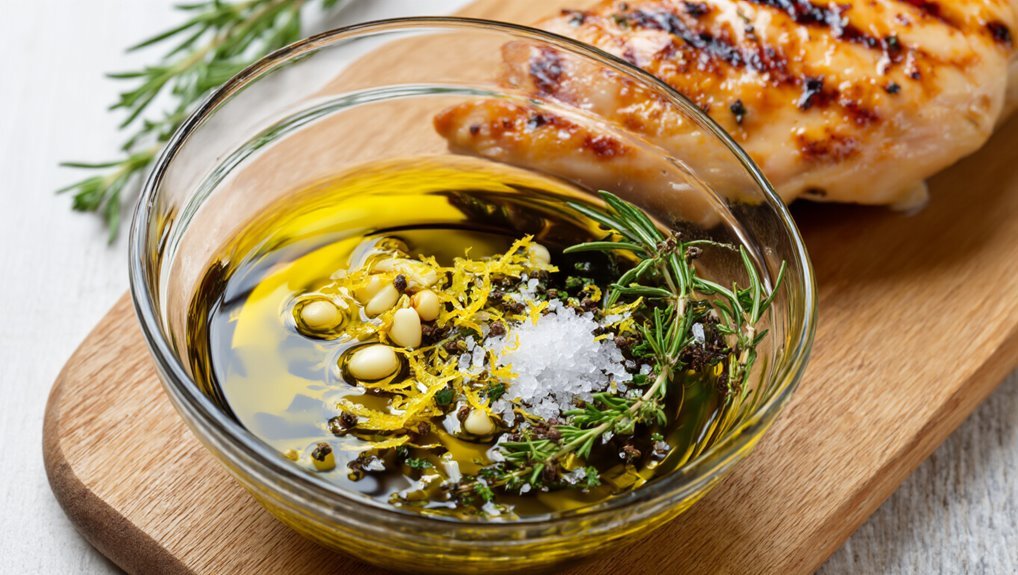
To whip up a perfect chicken marinade in just five minutes, you’ll need a balanced mix of ingredients. Use 1 part acid (like lemon juice or vinegar) to 3 parts oil (such as olive oil). Add in 1-2 teaspoons of salt, some sweetener like honey, and your favorite herbs and spices. Shake or stir them together until well combined, and your marinade is ready for chicken. Want to explore more creative marinade ideas? Keep on reading!
Key Takeaways
- Use a basic ratio of 1 part acid (like lemon juice) to 3 parts oil (like olive oil) for balance.
- Incorporate 1-2 teaspoons of salt per cup of marinade to enhance flavor.
- Add a sweetener, such as honey or brown sugar, to achieve flavor balance.
- Mix in herbs and spices to deepen the flavor profile of the marinade.
- Ensure to marinate chicken for at least 30 minutes, preferably several hours or overnight for optimal results.
Understanding the Basics of Marinades

When you want to elevate the flavor of your chicken, understanding the basics of marinades is essential. Marinades are a blend of liquids and seasonings that penetrate the meat, enhancing its taste and texture.
You’ve got three key components: acid, fat, and seasoning. The acid, like vinegar or citrus juice, tenderizes the meat, while the fat, such as oil, helps distribute flavors. Seasonings, including herbs and spices, infuse your chicken with personality. For those who want to take their cooking to the next level, using a high end rotisserie oven can ensure even roasting and superior flavor infusion.
Timing matters too; marinating for at least 30 minutes allows flavors to absorb, but several hours or overnight yields even more depth. For even greater precision and flavor infusion, consider using a high end sous vide machine to control temperature and ensure your chicken is cooked perfectly after marinating.
Essential Ingredients for a Flavorful Marinade
A great chicken marinade starts with the right ingredients that work together to create a harmonious blend of flavors.
To elevate your chicken dish, focus on incorporating these essential components:
- Acid: Lemon juice, vinegar, or yogurt to tenderize and add brightness.
- Oil: Olive oil or sesame oil for moisture and richness.
- Sweetener: Honey or brown sugar to balance acidity and enhance browning.
- Herbs and Spices: Fresh or dried herbs like rosemary, thyme, or garlic powder for depth.
- Salt: Kosher salt or soy sauce to boost overall flavor and help with moisture retention.
For even greater results, consider marinating your chicken and then cooking it in a premium slow cooker to achieve unmatched tenderness and flavor infusion. Using a high end slow cooker can ensure precise temperature control and bring out the best in your marinade.
The Perfect Ratio: Balancing Acids, Oils, and Seasonings
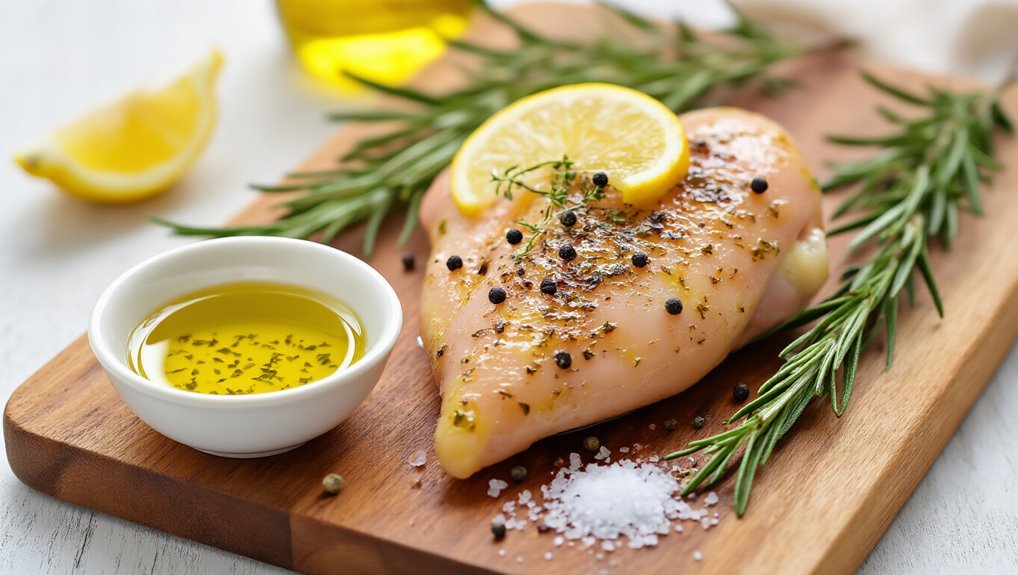
To achieve the perfect chicken marinade, finding the right balance between acids, oils, and seasonings is key.
Start with a base of acid, like vinegar or citrus juice, which tenderizes the chicken and enhances flavor. Aim for about 1 part acid to 3 parts oil. The oil not only helps distribute flavors but also keeps the chicken moist while cooking. For truly exceptional results, consider using a high-end rotisserie oven for even cooking and superior taste.
Next, seasonings are crucial; salt, herbs, and spices elevate your marinade. You can add around 1-2 teaspoons of salt per cup of marinade, adjusting to taste.
Don’t forget to include a touch of sweetness, like honey or sugar, to create a well-rounded flavor profile. Balancing these elements ensures your chicken stays juicy and packed with flavor. For best results, consider cooking your marinated chicken in a premium stainless steel skillet to achieve even searing and optimal browning.
Quick Marinade Recipes to Try
Finding the right marinade doesn’t have to be time-consuming. You can whip up a delicious marinade in just a few minutes! If you’re aiming for ultra-smooth blends, premium stand mixers can help you efficiently mix and emulsify your ingredients.
Here are some quick recipes you can try to elevate your chicken dishes:
- Lemon Garlic: Mix fresh lemon juice, minced garlic, olive oil, salt, and pepper.
- Honey Soy: Combine soy sauce, honey, minced ginger, and sesame oil for a sweet and savory kick.
- Spicy Yogurt: Blend plain yogurt with chili powder, cumin, and a squeeze of lime for a tangy heat.
- Balsamic Herb: Whisk balsamic vinegar, olive oil, fresh herbs (like rosemary and thyme), salt, and pepper.
- Cilantro Lime: Mix chopped cilantro, lime juice, garlic, and olive oil for a zesty flavor burst.
If you’re looking to level up your kitchen game, consider using a high end kitchen stand mixer to make your marinades even smoother and more flavorful. These marinades are sure to impress!
Tips for Marinating Chicken Effectively
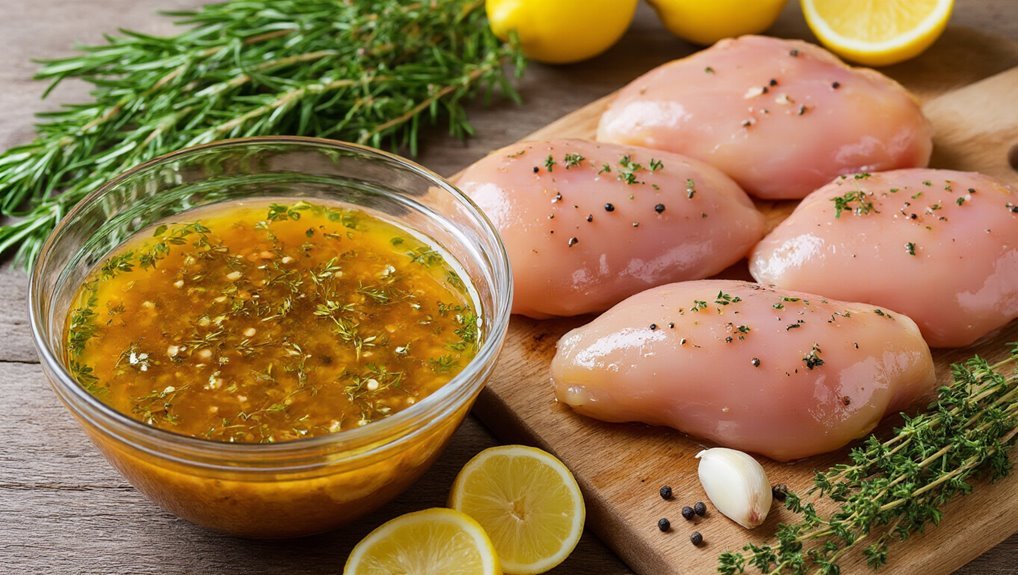
When it comes to marinating chicken effectively, timing and technique play crucial roles in achieving flavorful results.
Start by choosing the right marinade; it should have a balance of acid, oil, and seasonings. Use a resealable plastic bag or a glass dish for marinating—this helps ensure even coverage.
Always poke holes in the chicken with a fork to allow the marinade to penetrate better. Don’t forget to refrigerate the chicken during the marinating process to keep it safe.
If you’re using a salty marinade, avoid overdoing it; too much salt can make the chicken tough.
Finally, remember to discard any leftover marinade that’s come into contact with raw chicken to prevent cross-contamination.
Happy marinating!
How Long to Marinate for Maximum Flavor
How long should you let your chicken soak in that delicious marinade for the best flavor? The answer depends on the type of marinade and your desired intensity.
Generally, here are some guidelines:
- 30 minutes for lighter marinades (like citrus-based)
- 1-2 hours for medium marinades (like soy sauce or yogurt)
- Overnight for rich, bold marinades (like barbecue or spicy)
- Don’t exceed 24 hours to avoid mushiness
- Refrigerate while marinating to keep it safe
Cooking Methods for Marinated Chicken
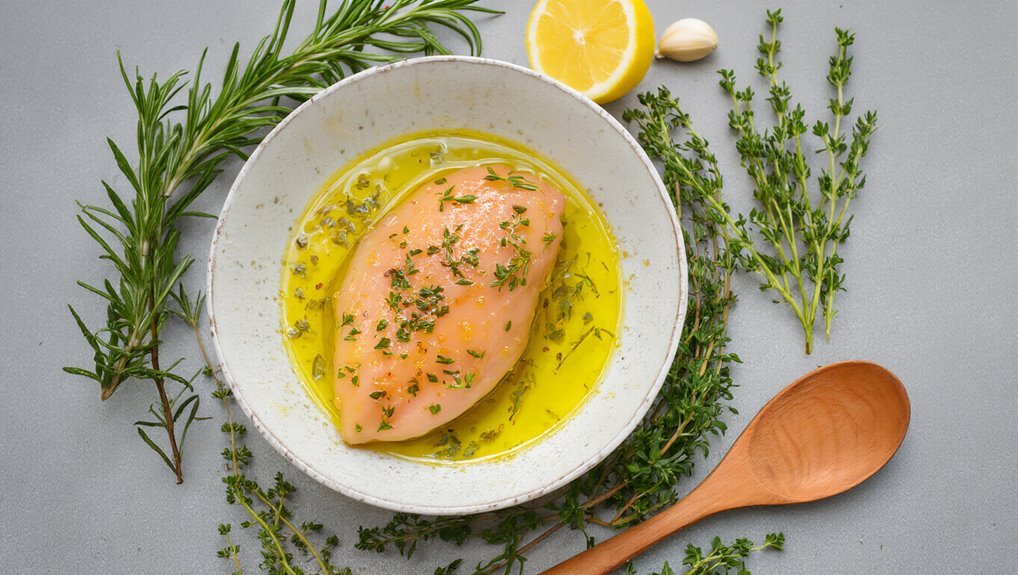
After letting your chicken soak in that flavorful marinade, it’s time to cook it to perfection. You’ve got several options to choose from.
Grilling is a fantastic way to achieve a smoky flavor while sealing in the juices. Preheat your grill, then cook the chicken over medium heat until it’s fully cooked.
If you prefer indoor cooking, baking is a reliable method. Simply preheat your oven to 375°F and bake the marinated chicken for about 25-30 minutes.
For a quick meal, sautéing in a hot skillet works wonders, giving the chicken a nice sear.
Whichever method you choose, use a meat thermometer to ensure the chicken reaches an internal temperature of 165°F for safe and delicious results!
Storing Leftover Marinade Safely
While it’s tempting to toss leftover marinade after cooking, you can safely store it for future use if you follow a few guidelines.
First, make sure the marinade hasn’t come into contact with raw meat to avoid contamination. If it has, it’s best to discard it.
For safe storage, keep these tips in mind:
- Cool it down: Let the marinade cool to room temperature before storing.
- Use airtight containers: Store in clean, airtight containers to prevent spoilage.
- Label it: Write the date on the container to track freshness.
- Refrigerate promptly: Store in the fridge within 2 hours of cooking.
- Use within a week: Try to use the stored marinade within 7 days for the best flavor.
Creative Variations to Customize Your Marinade

If you want to elevate your chicken marinade, experimenting with creative variations can make all the difference.
Start by swapping out the vinegar for citrus juice, like lemon or lime, to add brightness. Try incorporating different herbs—basil, cilantro, or rosemary can bring unique flavors. For a kick, mix in some hot sauce or crushed red pepper.
You could also use yogurt or buttermilk for a tenderizing effect and a creamy texture. Don’t forget about sweetness; honey or maple syrup can balance out savory elements beautifully.
Finally, consider adding a splash of soy sauce or Worcestershire sauce for depth. With these tweaks, you’ll craft a marinade that’s uniquely yours and brings your chicken to life!
Frequently Asked Questions
Can I Use Frozen Chicken for Marinating?
You can use frozen chicken for marinating, but it’s best to thaw it first. Marinating frozen chicken won’t penetrate properly, so thawing ensures the flavors infuse deeply and enhances your dish’s overall taste.
What Types of Containers Are Best for Marinating?
You’d think any container works, but truly, glass or food-safe plastic is best. Metal can react with acids, ruining your marinade. So, stick to what’s safe and effective for the tastiest results.
How Can I Tell if My Marinade Is Too Salty?
You can tell your marinade’s too salty by tasting it before marinating. If it overwhelms your palate, consider diluting it with water or adding more ingredients to balance the flavors for your dish.
Is It Safe to Reuse Marinade After Marinating Chicken?
Of course, reusing marinade is a brilliant idea—if you enjoy playing food safety roulette! It’s best to toss that marinade after use. You wouldn’t want to serve a side of bacteria with your chicken.
Can I Marinate Chicken in a Metal Bowl?
You can marinate chicken in a metal bowl, but avoid using reactive metals like aluminum, as they can react with acidic ingredients. Stainless steel is a safer choice, so your marinade stays flavorful and safe.
Conclusion
Now that you’ve mastered the 5-minute formula for a perfect chicken marinade, you’re ready to elevate your meals. For instance, imagine a busy weeknight where you whip up a zesty lemon-garlic marinade in no time, letting your chicken soak while you prep sides. The result? Juicy, flavorful chicken that impresses your family and makes dinner feel special. With these simple techniques, you’ll create mouthwatering dishes that keep everyone coming back for seconds. Happy cooking!