
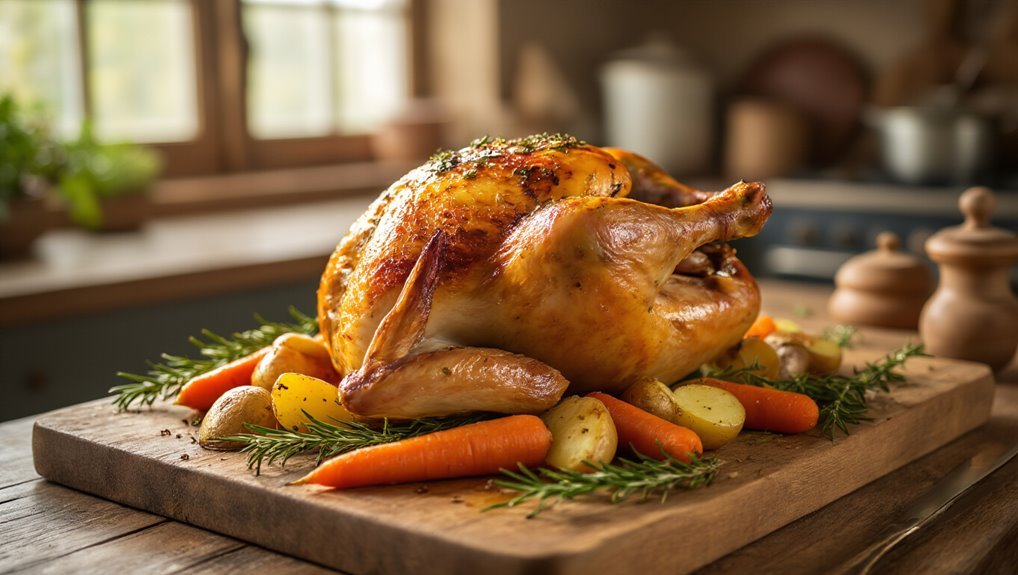
To roast a chicken like a Lazy Genius, start with a quality bird, ideally organic or local. Season it simply with salt, pepper, and olive oil. Prep your chicken by drying it well and tucking the wings in. Roast at a high temperature for crispy skin, checking for an internal temp of 165°F. Let it rest before serving for the juiciest results. Stick around for creative serving ideas and tasty leftover options you won’t want to miss!
Key Takeaways
- Choose a quality chicken, ideally 3-5 pounds, preferably organic or pasture-raised for better flavor and texture.
- Prep the chicken by drying it thoroughly, seasoning it generously with salt, pepper, and your favorite herbs.
- Use a roasting pan for even cooking and ensure the chicken is at room temperature before roasting.
- Monitor the internal temperature, aiming for 165°F (74°C) and let the chicken rest post-roasting to retain moisture.
- Get creative with leftovers by making chicken tacos, salads, or a comforting chicken soup for easy meals.
Choosing the Right Chicken
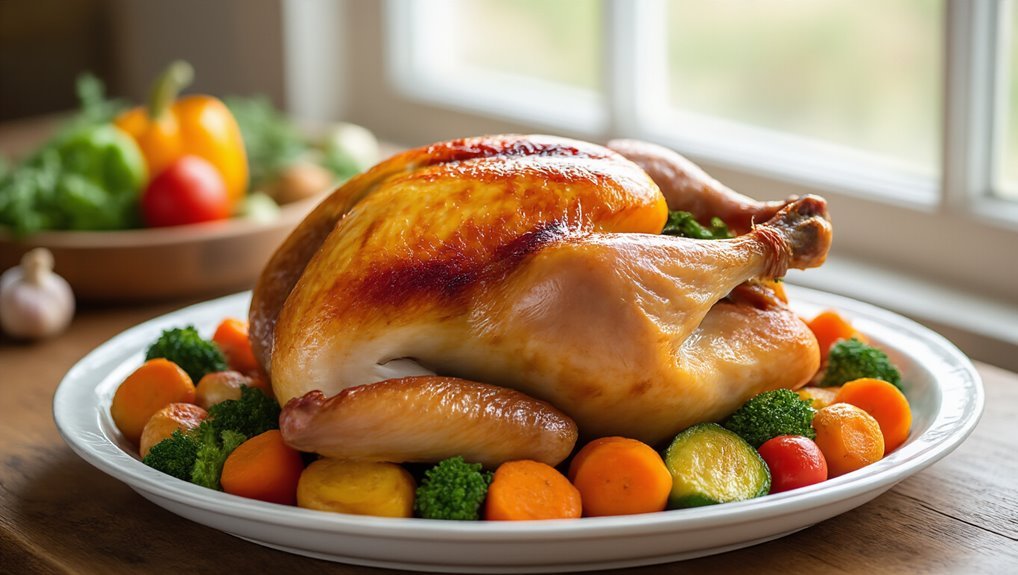
When it comes to choosing the right chicken, what factors should you consider? First, think about the size. A whole chicken typically weighs between 3 to 5 pounds—choose one that suits your meal needs.
Next, consider the type. Organic or pasture-raised chickens often have better flavor and texture. Don’t forget to check for freshness; look for a sell-by date that’s far in the future. For the most consistent and delicious results, consider using a high-end rotisserie oven to ensure even roasting and a perfectly crisp skin.
Skin color can also be an indicator; a yellowish hue often suggests a richer taste. Additionally, inspect the packaging for any tears or leaks.
Finally, if possible, buy from a local farm or butcher. They usually offer better quality and transparency about their chickens’ rearing conditions, ensuring you get the best for your roast.
For the perfect roast, consider using a high end rotisserie oven to achieve even cooking and crispy skin every time.
Essential Ingredients for Roasting
Once you’ve chosen the perfect chicken, gather the ingredients that will enhance its flavor during roasting. You’ll need good-quality olive oil or melted butter to help the skin crisp up beautifully.
Don’t forget salt and pepper; they’re essential for bringing out the chicken’s natural flavors. Fresh herbs like thyme, rosemary, or parsley add aromatic depth, so grab a handful. For those interested in exploring high end slow cookers, these appliances can also help you achieve tender, flavorful chicken with minimal effort.
A couple of garlic cloves, smashed but not minced, can infuse the meat with a savory punch. For a touch of acidity, consider lemon wedges or vinegar, which brighten the dish.
Finally, vegetables like onions or carrots can serve as a flavorful base and soak up the drippings, making your whole meal even more delicious. If you want to take your roast to the next level, consider using a premium stainless steel skillet to ensure even heat distribution and a perfectly crisp skin.
Prepping Your Chicken Like a Pro
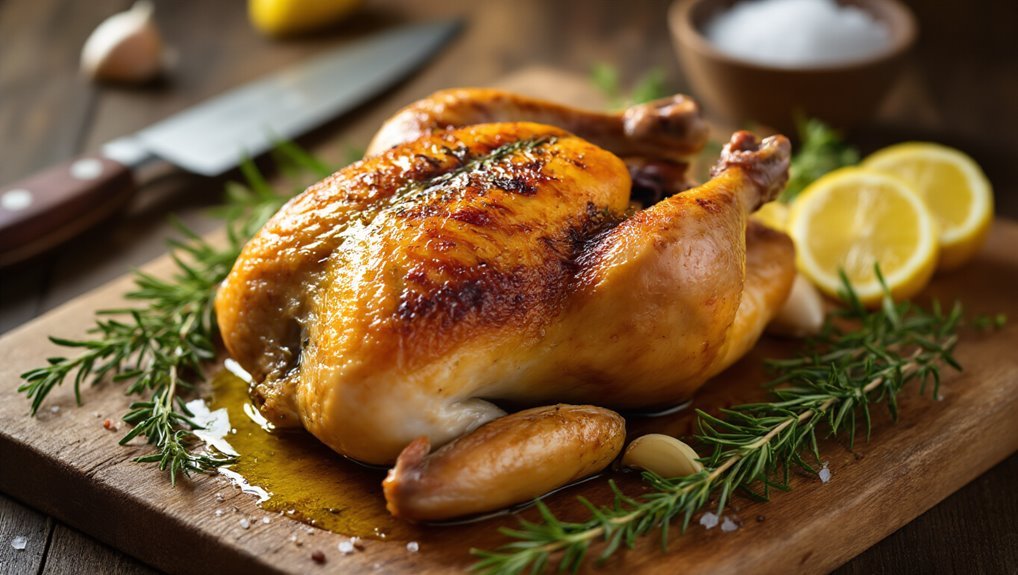
Preparing your chicken properly can make all the difference in achieving a juicy, flavorful roast. Start by patting the chicken dry with paper towels; this helps the skin crisp up beautifully. Next, remove any giblets from the cavity and give the chicken a quick rinse. For those who love kitchen gadgets, using a high end stand mixer can also elevate your prep process, especially if you’re mixing seasonings or dough for side dishes.
Here’s a handy checklist to guide you through prepping:
| Step | Action |
|---|---|
| 1. Dry the chicken | Use paper towels |
| 2. Remove giblets | Check the cavity |
| 3. Rinse the chicken | Quick rinse under water |
| 4. Trim excess fat | Use kitchen shears |
| 5. Tuck wings | Keep them close to the body |
For even more precise and consistent results, you might consider experimenting with high end sous vide machine cooking before finishing your chicken in the oven.
Follow these steps, and you’ll be well on your way to a perfectly roasted chicken!
The Perfect Seasoning Blend
A well-seasoned chicken can elevate your roast from ordinary to extraordinary. To create the perfect seasoning blend, start with kosher salt as your base; it enhances flavor without overpowering.
Add freshly ground black pepper for a kick, then mix in garlic powder and onion powder for depth. If you enjoy herbs, consider dried thyme, rosemary, or even a dash of smoked paprika for a subtle smokiness. For those who love kitchen gadgets, exploring a high end kitchen stand mixer can also enhance your meal prep experience by making it easier to blend spices and seasonings uniformly.
Don’t forget a touch of olive oil to help the seasoning adhere and promote browning. Rub your blend all over the chicken, including under the skin for maximum flavor penetration.
Let it sit for at least 30 minutes before roasting, allowing the seasoning to work its magic. If you want even more convenience and consistent results, consider using a high end slow cooker to roast your chicken to juicy perfection. Trust me, your taste buds will thank you!
Setting Up Your Roasting Environment
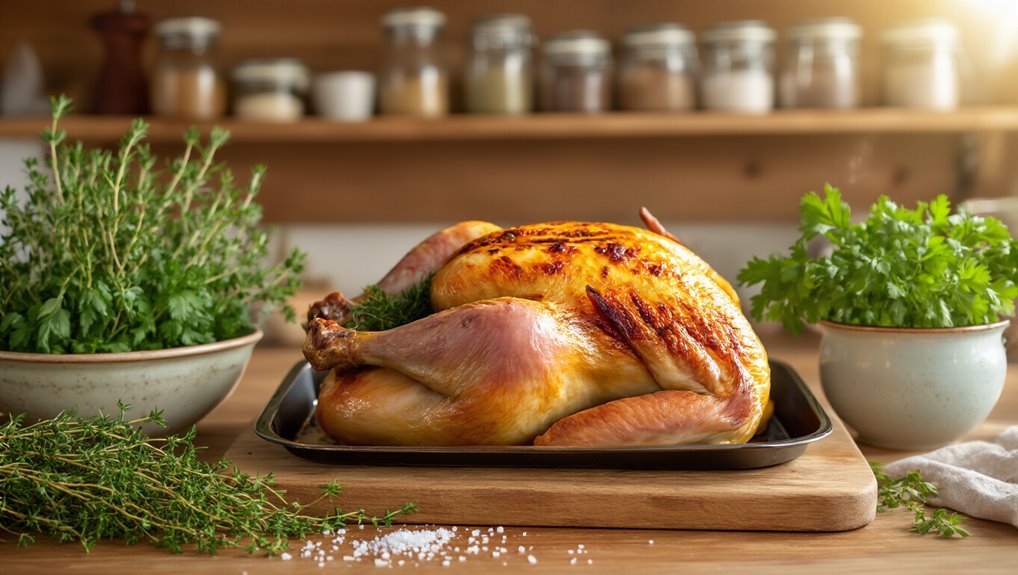
To ensure a successful roast, setting up your roasting environment is crucial. Start by preheating your oven to the right temperature; this step can make a world of difference. Next, gather your tools and ingredients to streamline the process.
Here’s a quick checklist to help you prepare:
| Essential Item | Purpose |
|---|---|
| Roasting Pan | Holds the chicken and drippings |
| Meat Thermometer | Ensures proper cooking temperature |
| Aluminum Foil | Covers the chicken to retain moisture |
| Sharp Knife | Carves the finished product |
| Cutting Board | Provides a surface for carving |
Roasting Techniques for Juicy Results
With your roasting environment set, it’s time to focus on techniques that yield juicy results.
Start by patting your chicken dry to ensure crispy skin. Season generously with salt and your favorite herbs, and don’t forget to season the cavity for maximum flavor.
Using a roasting rack elevates the bird, allowing for even heat circulation. For added moisture, consider adding aromatics like garlic, lemon, or onion inside the cavity.
Baste the chicken periodically with its own juices to lock in flavors.
Lastly, let the chicken rest after roasting; this allows the juices to redistribute, ensuring each bite is succulent.
Monitoring Temperature for Perfection
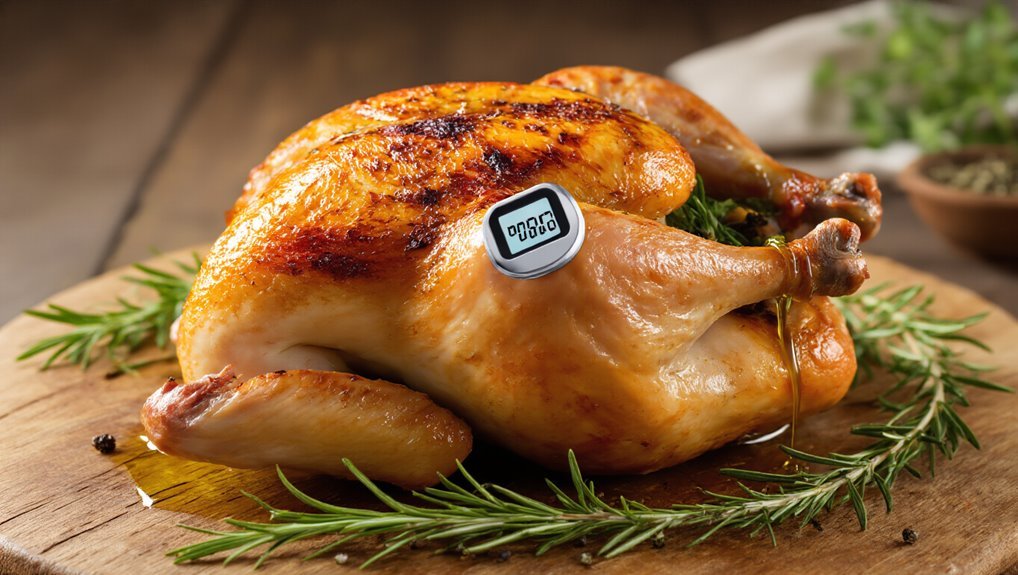
As you roast your chicken, monitoring the temperature is crucial for achieving that perfect doneness.
Use an instant-read thermometer to check the thickest part of the thigh, avoiding the bone. Aim for an internal temperature of 165°F (74°C); this ensures your chicken is safe to eat and juicy.
Start checking the temperature about 30 minutes before you expect it to be done, especially if you’re using a higher heat. If it’s close but not quite there, you can cover it with foil to prevent over-browning while it finishes cooking.
Letting It Rest: The Key to Juiciness
After you’ve nailed the perfect temperature, letting your chicken rest is vital for locking in all those delicious juices.
When you pull it from the oven, the muscles need time to relax. This resting period allows the juices to redistribute throughout the meat, ensuring each bite is tender and moist.
Aim for at least 15 to 20 minutes of rest; it’s worth the wait. Cover the chicken loosely with foil to keep it warm but avoid steaming it, which can lead to sogginess.
Use this time to finish any sides or prep your serving area. Trust me, slicing into a rested chicken makes a world of difference, giving you that juicy, flavorful experience you’ve been craving.
Enjoy!
Creative Serving Suggestions
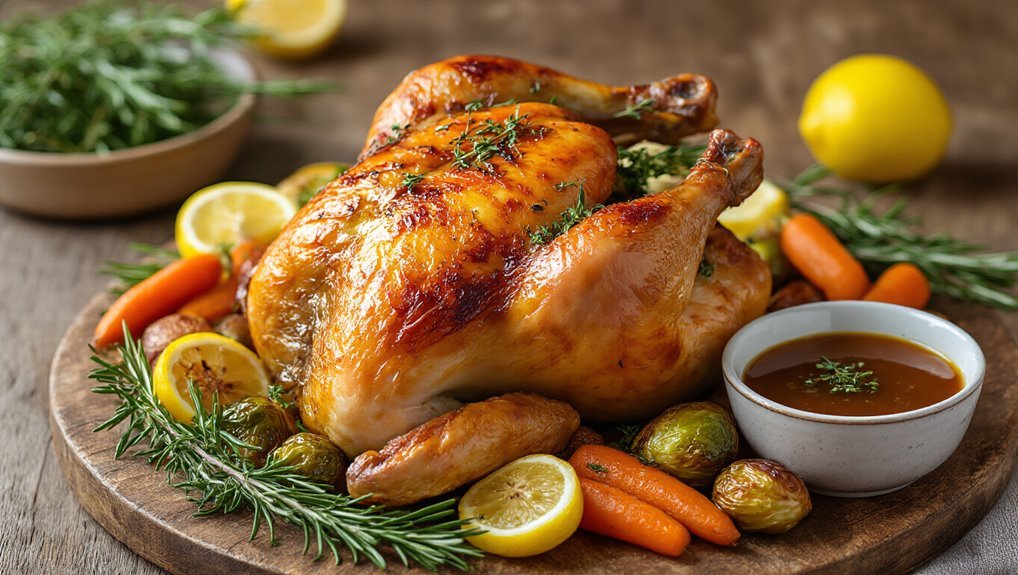
While you might think serving roasted chicken is straightforward, there are plenty of creative ways to elevate your dish. Instead of just plating it with sides, consider these unique serving suggestions that’ll impress your guests:
- Chicken Salad Lettuce Wraps: Shred the chicken and serve it in crisp lettuce leaves with your favorite toppings and a zesty dressing. It’s fresh and fun!
- Crispy Chicken Tacos: Shred the roasted chicken and use it as a filling for soft tortillas. Add avocado, salsa, and a squeeze of lime for a zesty twist.
- Mediterranean Chicken Bowls: Serve the chicken over a bed of quinoa or couscous, topped with chopped cucumbers, tomatoes, feta cheese, and a drizzle of olive oil for a vibrant meal.
These ideas will keep your roasted chicken exciting!
Leftover Chicken: Delicious Ideas
When you’ve got leftover roasted chicken, don’t let it go to waste; there are plenty of delicious ideas to transform it into new meals.
Shred the chicken and toss it into a vibrant salad with mixed greens, cherry tomatoes, and your favorite dressing. You can also make a comforting chicken soup by simmering the meat with broth, veggies, and noodles.
If you’re craving something heartier, whip up chicken tacos; just add some spices, avocado, and salsa.
Another great option is to stir it into a creamy pasta dish with your choice of sauce.
Finally, think about making a chicken pot pie for a cozy meal that warms the soul.
With these ideas, you’ll enjoy every last bite!
Frequently Asked Questions
Can I Roast a Chicken in an Air Fryer?
Yes, you can roast a chicken in an air fryer! It cooks quickly and evenly, giving you crispy skin and juicy meat. Just season it well, set the temperature, and enjoy your delicious meal!
How Long Does It Take to Thaw a Frozen Chicken?
If you’re planning a delicious chicken dinner, remember that thawing a frozen chicken usually takes 24 hours in the fridge. For quicker options, try cold water immersion, which takes about an hour per pound.
What Type of Pan Is Best for Roasting?
For roasting, you’ll want a sturdy, oven-safe pan. A heavy-duty roasting pan or cast iron skillet works best, as they distribute heat evenly and help achieve that delicious, crispy skin you’re aiming for.
Can I Use a Pre-Seasoned Chicken?
Yes, you can absolutely use a pre-seasoned chicken! It saves time and adds flavor. Just make sure to follow the cooking instructions on the packaging for the best results, and enjoy your delicious meal!
How Can I Tell if My Chicken Is Done Without a Thermometer?
You can tell if your chicken’s done by checking the juices. If they run clear, it’s likely cooked. Also, the meat should feel firm, and the skin should be golden brown. Trust your instincts!
Conclusion
By embracing the lazy genius way, you’ve turned a simple roast chicken into a culinary masterpiece, much like a painter transforming a blank canvas. Remember, it’s not just about the chicken; it’s about savoring the journey from prep to plate. As you carve and share, you’re creating memories that linger longer than the meal itself. So, gather your loved ones, relish the flavors, and let each bite remind you that great meals, like great stories, are meant to be shared.