The #1 mistake you’re making with scrambled eggs is overcooking them. High heat makes them rubbery and tough instead of soft and creamy. You should cook them over low to medium heat and remove them while they’re still slightly runny; they’ll keep cooking off the heat. Aim for that glossy, fluffy texture by whisking them well and adding dairy at the right moment. There’s more to perfecting your scramble that’ll elevate your breakfast game.
Key Takeaways
- Overcooking eggs leads to a rubbery texture; remove from heat while still slightly runny.
- Using high heat causes uneven cooking and tough consistency; stick to low to medium heat.
- Not whisking eggs enough fails to incorporate air, resulting in denser eggs; whisk vigorously for fluffiness.
- Adding salt too early draws out moisture, making eggs watery; season just before cooking.
- Skipping fresh ingredients compromises flavor; always use fresh eggs and herbs for the best taste.
Understanding the Basics of Scrambled Eggs
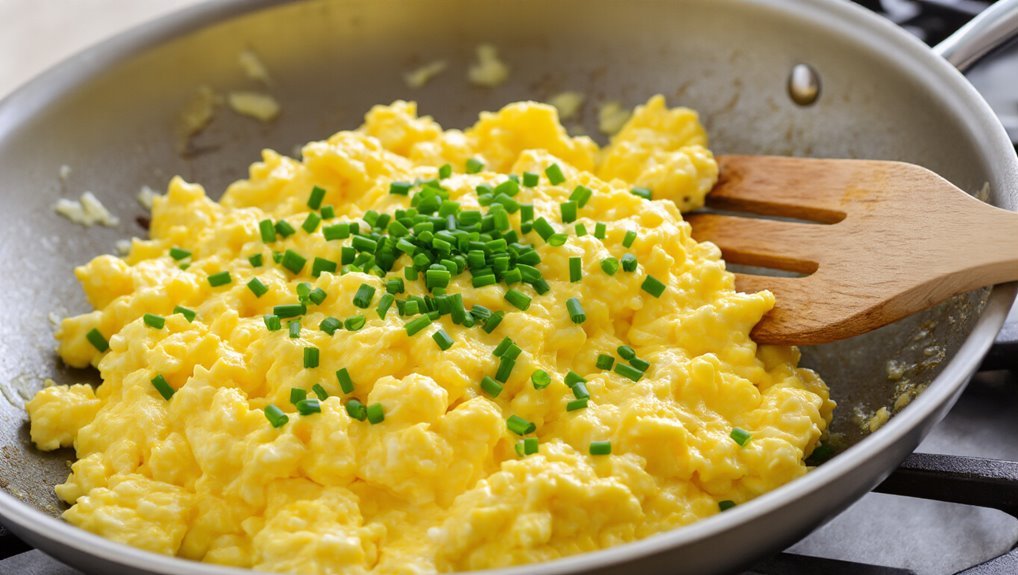
When you think about breakfast, scrambled eggs often come to mind as a quick and satisfying option. To master this classic dish, start with fresh eggs. Crack them into a bowl and whisk until the yolks and whites blend seamlessly.
Adding a splash of milk or cream can make your eggs creamier, but it’s optional. Season with salt and pepper, but hold off on adding these until just before cooking, as salt can draw out moisture.
Preheat your non-stick skillet over medium-low heat, and use a little butter for richness. Pour in the eggs and gently stir with a spatula. Keep the heat low; slow cooking yields a fluffy texture. For best results, consider using an oven safe skillet for versatility in both stovetop and oven cooking, especially if you want to finish your scrambled eggs in the oven for an extra light and airy consistency.
The Importance of Fresh Ingredients
While you might be tempted to grab any eggs from your fridge, using fresh ingredients significantly enhances the flavor and texture of your scrambled eggs. Fresh eggs have a richer taste and creamier consistency, elevating your dish from ordinary to extraordinary.
When you choose ingredients like fresh herbs, cream, or cheese, you not only boost flavor but also add depth and complexity. Mozzarella cheese is a fantastic addition that melts beautifully, giving your scrambled eggs a creamy texture and subtle flavor—learn more about delicious ways to enjoy mozzarella cheese. Always check the expiration dates on your eggs and opt for local or organic options when possible.
Fresh ingredients don’t just improve taste; they also provide better nutritional value. For an extra creamy texture, consider using shelf stable heavy cream as it offers convenience and long-lasting freshness without sacrificing quality. So, next time you’re whipping up scrambled eggs, remember that using the freshest ingredients can make a world of difference in your breakfast experience. Enjoy every bite!
The Role of Heat in Cooking Eggs
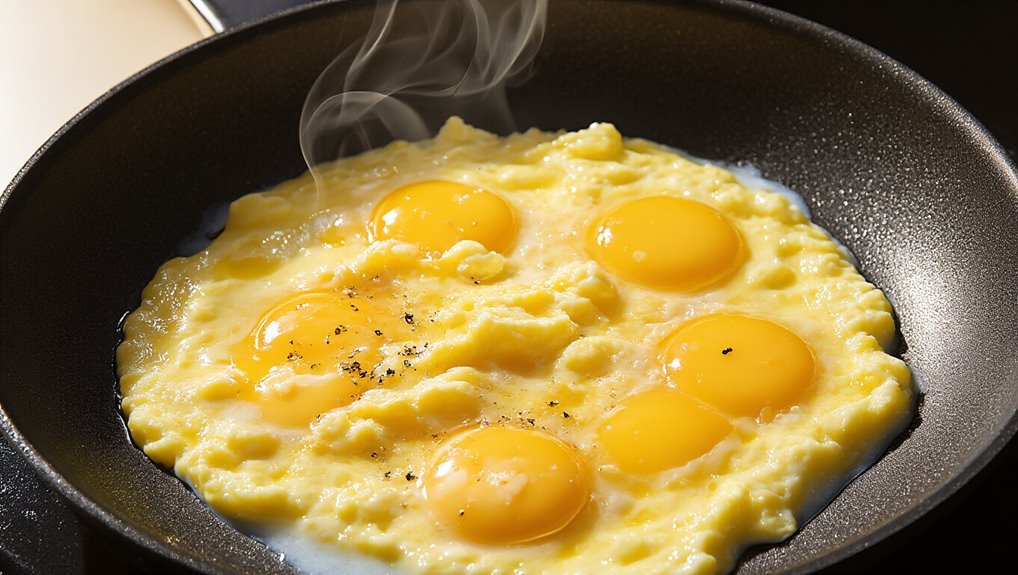
Fresh ingredients set the stage for a perfect scramble, but understanding the role of heat is equally important in achieving that fluffy texture you crave.
When you cook scrambled eggs, the heat you apply directly impacts their texture and flavor. Start with low to medium heat; this allows the proteins to gently unfold without seizing up. If the heat’s too high, you risk cooking them unevenly, creating a rubbery consistency. For an extra boost of flavor and protein, consider adding chicken breast strips to your eggs for a satisfying meal.
Stirring continuously helps distribute the heat evenly, ensuring every part of the egg cooks at the same rate. Remember, patience is key.
If you’re looking to add protein to your meal, shredded chicken breast is a delicious and easy option that pairs perfectly with scrambled eggs.
The Common Mistake: Overcooking
Overcooking scrambled eggs can quickly turn a potential breakfast delight into a rubbery disappointment. You might think that cooking them a little longer will enhance their flavor, but it actually dries them out.
The key is to watch them closely and remove them from the heat while they’re still slightly runny. Eggs continue to cook even after you take them off the stove, so trusting your instincts is crucial. If you want to make a breakfast casserole, using a pasta bake dish can help ensure even cooking and prevent your eggs from becoming overdone. Aim for a soft, creamy texture that melts in your mouth, not a tough consistency.
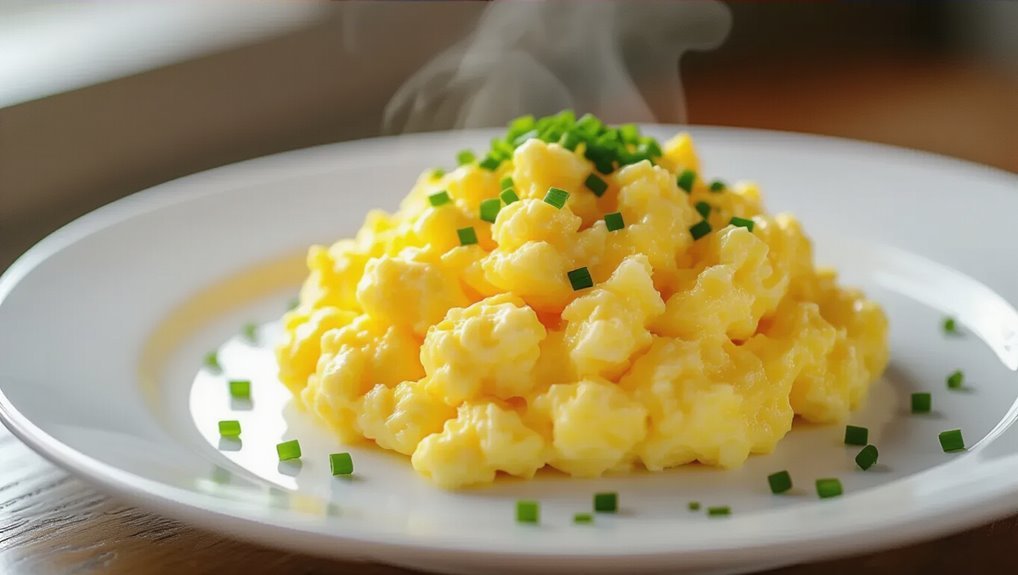
If you notice them starting to firm up, it’s time to act. Perfectly cooked scrambled eggs should look glossy and fluffy, making them a delicious start to your day. Don’t let overcooking ruin that!
For even better results, consider using a wok pan for scrambled eggs, as its shape allows for even heat distribution and gentle stirring.
The Impact of Whisking Technique
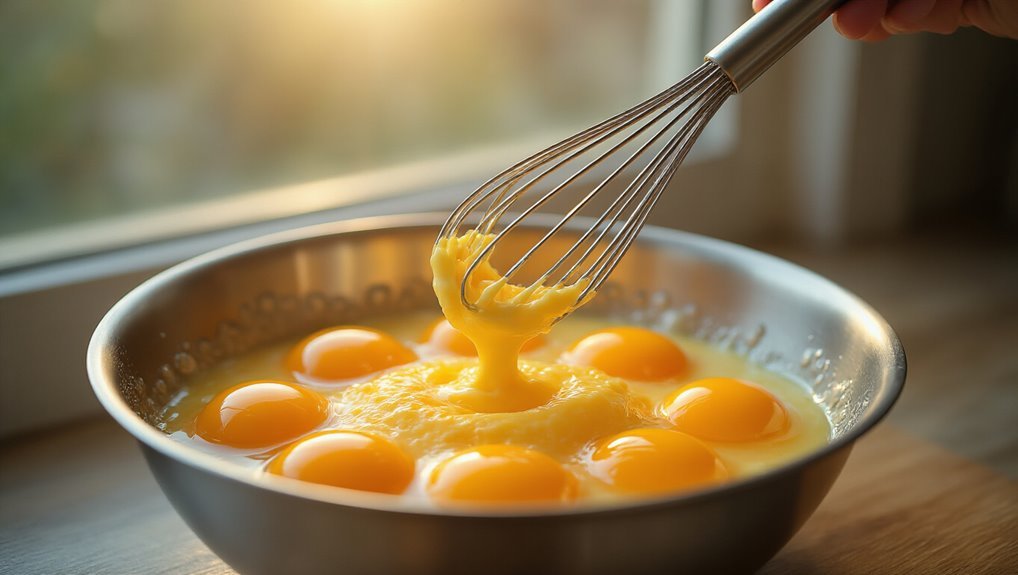
Your cooking technique can make a significant difference in the outcome of your scrambled eggs, especially when it comes to whisking. If you want fluffy, light eggs, you’ve got to whip them vigorously. This technique incorporates air, which leads to a creamier texture.
Use a fork or a whisk to beat the eggs until the yolks and whites are fully combined, but don’t overdo it; aim for about 30 seconds. You want to create bubbles without turning the mixture into a froth.
Also, consider the direction you whisk—circular motions can help ensure even blending. Remember, a good whisking technique sets the foundation for perfect scrambled eggs, so don’t skip this crucial step!
Adding Dairy: When and How Much
While adding dairy can enhance the creaminess of scrambled eggs, timing and quantity are essential for achieving the perfect texture.
You should add dairy—like milk, cream, or even sour cream—before you whisk the eggs. This ensures even incorporation and a smooth consistency. Generally, about one tablespoon of dairy per egg works well, but feel free to adjust based on your preference for creaminess. If you add too much, you risk watery eggs.
Stir gently to combine, and don’t overwhisk; you want to maintain some airiness. Instead of cooking the eggs immediately, let the mixture sit for a few minutes to let the flavors meld.
This simple step elevates your scrambled eggs from ordinary to extraordinary.
Seasoning Your Eggs at the Right Time
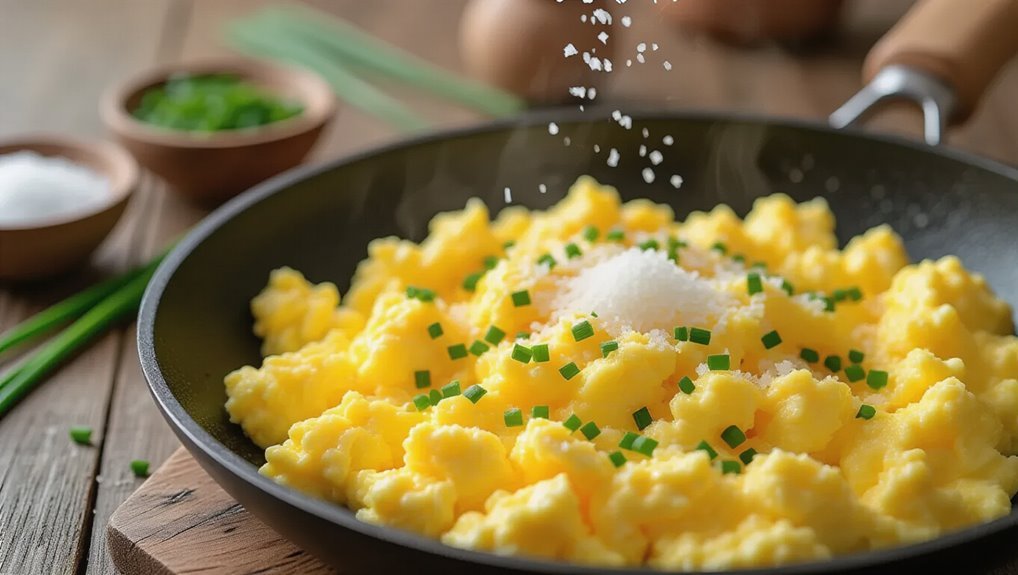
To achieve perfectly seasoned scrambled eggs, it’s crucial to know when to add salt and other spices. Timing makes all the difference in flavor. Here’s how to do it right:
- Before Cooking: Sprinkle salt on your eggs before whisking them. This helps dissolve the salt evenly, ensuring every bite is flavorful.
- During Cooking: Add a pinch of salt and spices just as the eggs begin to set. This allows the flavors to meld while cooking.
- After Cooking: Taste your eggs after they’re cooked and adjust seasoning if needed. A final touch of salt or fresh herbs can elevate the dish.
Master these steps, and you’ll enjoy scrambled eggs that are perfectly seasoned every time!
Elevating Flavors With Additions and Toppings
Once you’ve mastered seasoning your scrambled eggs, it’s time to take them up a notch with delicious additions and toppings.
Consider mixing in sautéed vegetables like bell peppers, spinach, or mushrooms for a burst of flavor and nutrition. Cheeses like feta, cheddar, or goat cheese can add creaminess and depth. Don’t forget about herbs—fresh chives, parsley, or cilantro can brighten your dish.
For a spicy kick, try adding a dash of hot sauce or some sliced jalapeños. If you’re feeling indulgent, top your eggs with crispy bacon or smoked salmon.
Finally, a drizzle of truffle oil or a sprinkle of everything bagel seasoning can elevate your scrambled eggs to a gourmet experience. Enjoy experimenting!
Frequently Asked Questions
Can I Use Leftover Scrambled Eggs the Next Day?
Yes, you can use leftover scrambled eggs the next day. Just store them in an airtight container in the fridge. When you reheat, make sure they’re heated thoroughly to ensure safety and taste.
How Can I Make Scrambled Eggs Fluffier?
If your scrambled eggs resemble an overcooked sponge, it’s time for a change. Whisk ’em vigorously, add a splash of milk, and cook on low heat. Fluffiness awaits—your breakfast will thank you!
Is It Better to Use a Non-Stick Pan?
Yes, using a non-stick pan is better for scrambled eggs. It prevents sticking, allowing you to cook them evenly and effortlessly. You’ll find it easier to achieve that perfect fluffy texture you’re aiming for.
Can I Add Vegetables to Scrambled Eggs?
Absolutely, you can add vegetables to scrambled eggs! Just sauté them first for better flavor and texture. Incorporating spinach, tomatoes, or bell peppers not only enhances taste but also boosts the nutritional value. Enjoy experimenting!
What Type of Eggs Is Best for Scrambling?
Did you know that around 90% of chefs prefer fresh, organic eggs for scrambling? They deliver richer flavor and creaminess. So, grab those organic eggs, and you’ll elevate your scrambled eggs to a whole new level!
Conclusion
So, next time you crack those eggs, remember: a gentle touch is key. Picture creamy, golden curds sliding onto your plate, steam rising as you take in the rich aroma. Avoid the common trap of overcooking, and embrace the art of whisking to create fluffy perfection. With a sprinkle of salt and your favorite toppings, you’ll transform a simple breakfast into an irresistible feast. Your scrambled eggs deserve this attention—after all, every bite should be a delight!