
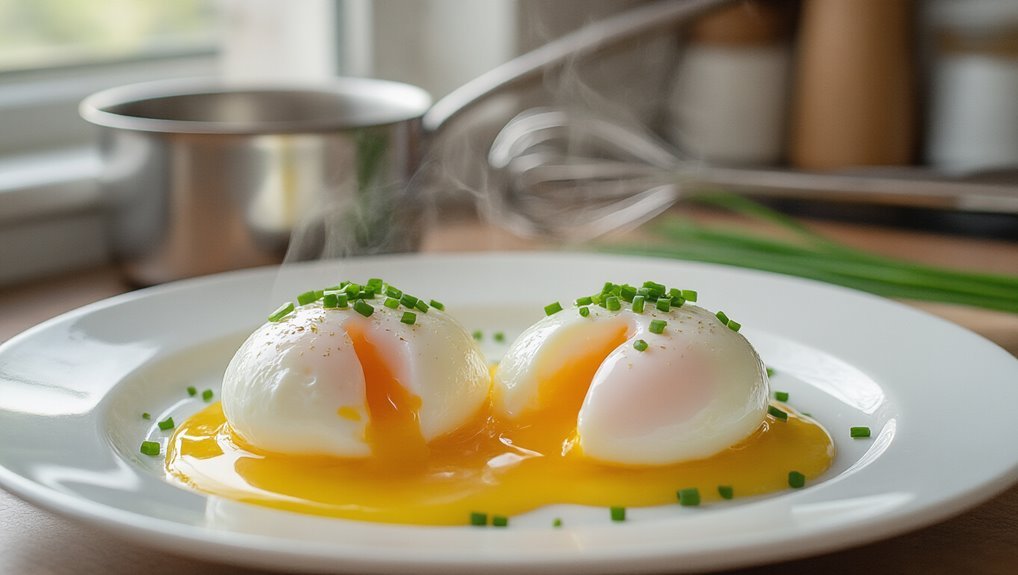
To poach eggs perfectly every time, start by simmering water at 180°F to 190°F. Add a splash of vinegar to help the whites set quickly. Crack your fresh egg into a bowl, then create a whirlpool in the water before gently sliding in the egg. Cook for 3-4 minutes until the whites are firm but the yolk remains runny. Avoid common mistakes like using boiling water or older eggs. There’s more to mastering this technique!
Key Takeaways
- Use fresh eggs to maintain shape and ensure smooth poaching results.
- Maintain water temperature between 180°F to 190°F for a gentle simmer.
- Add a splash of vinegar to help egg whites coagulate quickly.
- Create a whirlpool in the water before adding the egg for better shape.
- Cook eggs for 3-4 minutes for set whites and runny yolks.
Understanding the Basics of Poaching Eggs
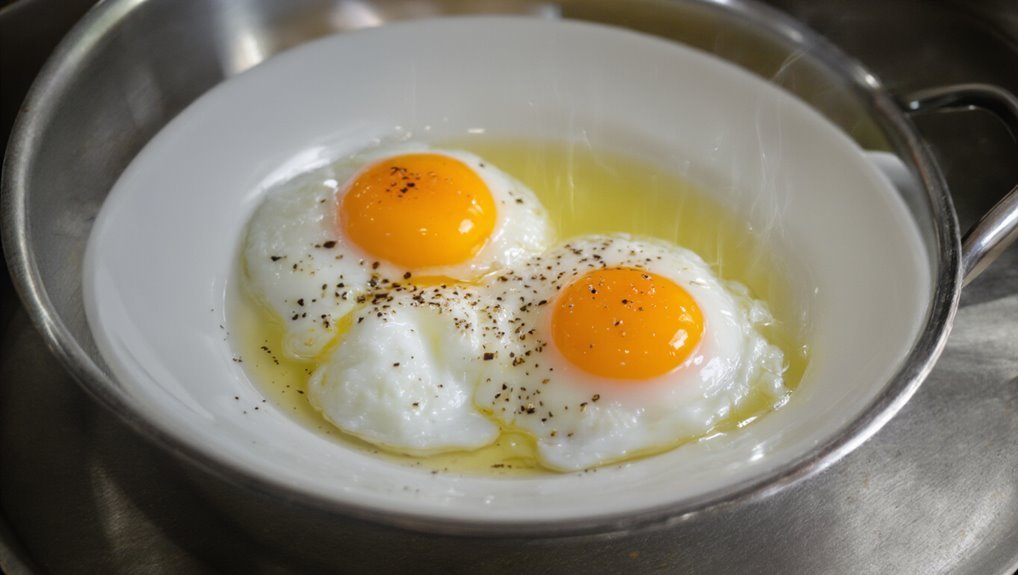
When you want to master poaching eggs, it’s essential to grasp the fundamentals. Poaching is all about gentle cooking, where heat transforms the egg without any bubbling chaos.
Start by using fresh eggs; they hold their shape better. The water needs to be just below boiling—around 180°F to 190°F—creating a gentle simmer. You don’t need vinegar or salt in the water; they can affect the egg’s texture. For those who enjoy baking as well, using an oven safe baking dish can be ideal for recipes that finish in the oven.
Instead, create a whirlpool by stirring the water before adding the egg, which helps keep the whites together. For perfect timing, aim for about three to four minutes, depending on how runny you like the yolk.
If you’re planning to finish your eggs in the oven, it’s crucial to use an oven safe skillet to ensure both safety and perfect results. Master these basics, and you’ll be on your way to poaching eggs like a pro!
Essential Tools and Ingredients
To successfully poach eggs, having the right tools and ingredients is crucial. Start with fresh eggs; the fresher they are, the better your poached eggs will turn out.
You’ll also need a deep saucepan or skillet, which allows enough water for the eggs to float freely. A slotted spoon is essential for gently lifting your eggs out of the water without breaking them. Using a meat thermometer can help you ensure that your kitchen tools are not only versatile but also accurate for various cooking needs.
Having a small bowl nearby helps you crack each egg before adding it to the pot, ensuring a smooth process. Don’t forget white vinegar; it helps the egg whites coagulate quickly.
Lastly, a thermometer can be handy to monitor water temperature, keeping it at the ideal range for poaching. Using a digital meat thermometer ensures your water stays at the perfect temperature for consistently excellent results. With these essentials, you’re ready to begin!
Step-by-Step Guide to Poaching Eggs

Poaching eggs is a straightforward process that yields delicious results.
First, fill a saucepan with water and bring it to a gentle simmer. Add a splash of vinegar—this helps the egg whites stay together. For best results, consider using one pan cookware designed for even heat distribution.
Crack your fresh egg into a small bowl, then gently slide it into the simmering water. To create a whirlpool effect, stir the water in a circular motion before adding the egg; this helps it maintain a nice shape.
Let the egg cook for about 3-4 minutes, until the whites are set and the yolk remains runny. Use a slotted spoon to carefully lift the egg out, allowing excess water to drain.
Serve immediately on toast, salads, or as you like. Enjoy your perfectly poached egg!
For even better results, you might want to try using a wok pan since its wide, sloped sides make swirling the water and poaching eggs even easier.
Common Mistakes to Avoid
Creating the perfect poached egg can be tricky if you’re not aware of common pitfalls. Avoiding these mistakes will help you achieve that silky texture and runny yolk you crave.
- Skipping the vinegar: Adding a splash of vinegar helps the egg white coagulate faster, preventing a feathery mess.
- Using water that’s too hot: If the water’s boiling, it can break apart the egg. You want a gentle simmer for optimal results. Using the right casserole dish for poaching can also ensure even heat distribution and better results.
- Not using fresh eggs: Fresh eggs hold their shape better when poached. Older eggs tend to spread out, resulting in an unsightly appearance.
For an extra layer of flavor, consider drizzling your finished eggs with a touch of soy sauce for a savory twist.
Creative Ways to Serve Poached Eggs

Although poached eggs are delicious on their own, there are countless creative ways to elevate this simple dish. Try serving them on a bed of sautéed spinach with a sprinkle of feta cheese for a Mediterranean twist. You can also top them with avocado slices and chili flakes for a trendy brunch option.
Here’s a quick reference table to inspire you:
| Serving Style | Accompaniments | Flavor Profile |
|---|---|---|
| Classic Toast | Buttered sourdough | Comforting & Rich |
| Asian Fusion | Soy sauce, scallions | Savory & Umami |
| Spicy Mexican | Salsa, avocado | Fresh & Zesty |
| Salad Delight | Mixed greens, vinaigrette | Light & Refreshing |
| Breakfast Bowl | Quinoa, veggies | Nutritious & Satisfying |
Experiment and enjoy!
Frequently Asked Questions
Can I Poach Eggs in Advance and Reheat Them Later?
You can poach eggs in advance, store them in cold water, and reheat them gently in hot water. Just remember to avoid overcooking, and they’ll still taste delicious when you’re ready to enjoy them.
What Types of Eggs Are Best for Poaching?
For poaching, fresh eggs work best. Their whites are firmer, creating a better shape. You’ll enjoy the rich flavor and texture too. Avoid older eggs, as they spread too much in the water.
How Do I Know When the Eggs Are Fully Poached?
Did you know that perfectly poached eggs have a yolk temperature of about 165°F? You’ll know your eggs are fully poached when the whites are firm, and the yolks feel slightly soft to the touch.
Can I Use Flavored Vinegar for Poaching?
Yes, you can use flavored vinegar for poaching! It’ll add a nice twist to your eggs. Just remember to choose a flavor that complements the dish, so your poached eggs taste deliciously unique. Enjoy experimenting!
What’S the Ideal Water Temperature for Poaching Eggs?
The ideal water temperature for poaching eggs is between 180°F and 190°F. You want it simmering, not boiling, to ensure your eggs cook evenly without breaking apart. Keep an eye on your pot!
Conclusion
Now that you’ve mastered the art of poaching eggs, you can impress friends and family with your culinary skills. Did you know that over 40% of people find poached eggs intimidating? With this foolproof method, you’ll be part of the elite group that enjoys perfect poached eggs every time. So, go ahead and experiment with different serving ideas—your breakfast game is about to reach new heights! Get ready to savor those delicious, creamy bites!


